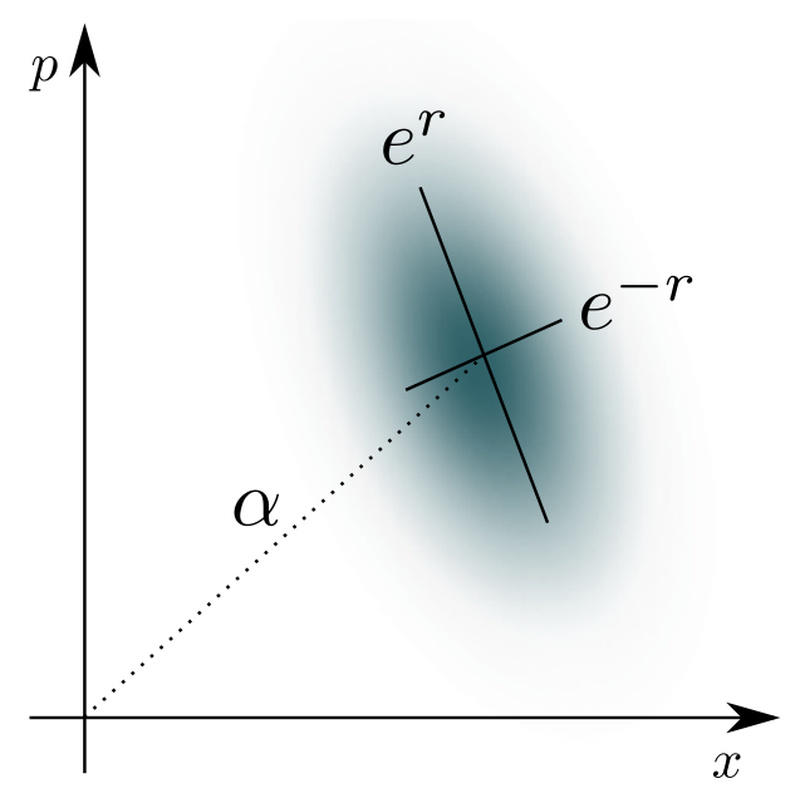
If you’re exploring quantum computing but want to move beyond abstract theory and into hands-on experimentation—especially with light-based (photonic) systems—Strawberry Fields offers a practical, open-source entry point. Developed by Xanadu AI, Strawberry Fields is a full-stack Python library designed specifically for continuous-variable (CV) quantum computing using photons. Unlike traditional qubit-based frameworks, it leverages the unique properties of light to enable quantum simulations, algorithm development, and even deployment on actual photonic quantum hardware.
What makes Strawberry Fields particularly compelling for researchers, developers, and technical decision-makers is its seamless blend of high-level programming abstractions, flexible simulation backends, and real-world applicability in domains like machine learning, network optimization, and quantum chemistry—all without requiring immediate access to physical quantum devices.
Why Strawberry Fields Stands Out
A Full-Stack Platform for Photonic Quantum Computing
Strawberry Fields isn’t just a simulator—it’s an integrated ecosystem for designing, running, and optimizing quantum optical circuits. At its core, it provides:
- A Python-native API that lets you define quantum circuits using intuitive, high-level syntax.
- The Blackbird language, a domain-specific language for photonic quantum programs, which integrates smoothly with Python.
- Three built-in backends:
- A NumPy-based backend for fast, deterministic simulations.
- A TensorFlow-based backend that supports automatic differentiation—critical for training variational quantum circuits.
- A Gaussian backend optimized for simulating Gaussian states and operations efficiently.
This modular architecture means you can prototype algorithms rapidly in simulation and, when ready, deploy them on Xanadu’s photonic quantum processors (as hardware access becomes available).
Real-World Problem Solving Out of the Box
Strawberry Fields includes implementations of foundational quantum protocols and algorithms, such as:
- Quantum teleportation
- Gaussian boson sampling (GBS)
- Instantaneous Quantum Polynomial (IQP) circuits
- Hamiltonian simulation
- Variational quantum circuit optimization
More importantly, it provides high-level functions tailored to practical applications:
- Graph and network optimization using GBS (e.g., finding dense subgraphs or solving maximum clique problems).
- Quantum machine learning models that integrate with TensorFlow for end-to-end training.
- Quantum-enhanced chemistry simulations leveraging CV representations of molecular systems.
These aren’t just academic demos—they’re tools you can adapt to real R&D challenges today.
Practical Use Cases
Quantum Machine Learning Prototyping
With its TensorFlow backend, Strawberry Fields enables gradient-based optimization of quantum circuits. This is invaluable for developing hybrid quantum-classical models where quantum layers are embedded within larger neural architectures. Researchers have used it to explore quantum kernels, generative models, and feature maps that leverage photonic interference.
Algorithm Validation Without Hardware
Even if you don’t have access to a photonic quantum computer, Strawberry Fields’ simulators let you:
- Verify circuit correctness
- Benchmark algorithm performance
- Explore noise models and scalability limits
This is especially useful for academic labs or startups evaluating quantum approaches before committing to hardware investments.
Solving Combinatorial Problems via Boson Sampling
Gaussian boson sampling—a native capability in Strawberry Fields—has been shown to encode graph problems in ways that classical computers struggle to simulate. If your work involves logistics, network design, or pattern recognition in complex systems, this offers a promising quantum-inspired avenue to explore.
Getting Started Is Straightforward
Installation is as simple as:
pip install strawberryfields
A minimal quantum circuit can be written in just a few lines:
import strawberryfields as sf
from strawberryfields import ops

# Create a 2-mode quantum program
prog = sf.Program(2)

with prog.context as q:  ops.Sgate(1.0) | q[0]      # Apply squeezing  ops.BSgate() | (q[0], q[1])  # Apply a beamsplitter

# Run on the NumPy backend
eng = sf.Engine("fock", backend_options={"cutoff_dim": 5})
result = eng.run(prog)
The library’s tutorials walk you through everything from basic state preparation to training a quantum neural network—making it accessible even if you’re new to continuous-variable quantum computing.
Important Limitations to Consider
While powerful, Strawberry Fields isn’t a universal quantum computing framework. Key considerations include:
- Continuous-variable focus: It’s built for photonic systems using quadrature operators and Gaussian states, not discrete qubits. If your work relies on gate-based qubit models (e.g., IBM or Rigetti systems), this isn’t the right tool.
- Python version constraints: Requires Python 3.7–3.10; newer versions (3.11+) are not yet supported.
- Hardware access is evolving: While integration with Xanadu’s quantum hardware is planned, widespread access remains limited. Most users will rely on simulators for the foreseeable future.
These constraints mean Strawberry Fields is best suited for teams specifically interested in photonic quantum computing or exploring CV-based quantum algorithms.
Summary
Strawberry Fields lowers the barrier to entry for photonic quantum computing by combining a clean Python interface, flexible simulation engines, and real-world application templates. Whether you’re prototyping quantum machine learning models, simulating optical circuits, or exploring quantum advantages in graph problems, it provides a robust, open-source foundation to accelerate your R&D. For technical evaluators seeking a practical, well-documented platform in the CV quantum space, Strawberry Fields is a compelling choice worth serious consideration.