In today’s cloud-first world, organizations increasingly need to collaborate across trust boundaries—whether in finance, healthcare, supply chains, or regulatory compliance. But how can mutually distrusting parties jointly run a shared service without exposing sensitive data or logic to each other—or to the very cloud infrastructure hosting it?
Enter the Confidential Consortium Framework (CCF), an open-source framework developed by Microsoft that enables the creation of secure, highly available, and performant stateful applications for multi-party environments. CCF uniquely combines hardware-enforced confidentiality, immutable data integrity, and fault-tolerant availability—all while decoupling governance from infrastructure ownership.
Unlike traditional distributed systems that assume trusted operators or rely solely on cryptographic protocols, CCF leverages Trusted Execution Environments (TEEs) like Intel SGX to provide remotely verifiable guarantees that code and data remain confidential and unaltered—even when deployed on untrusted public clouds. At the same time, it uses state machine replication backed by an immutable ledger to ensure data integrity and continuous availability, even if some nodes fail.
This makes CCF ideal for scenarios where multiple organizations must jointly manage a critical service but cannot fully trust each other—or their cloud provider.
Why CCF Stands Out: Core Capabilities That Solve Real Problems
Hardware-Backed Confidentiality and Code Integrity
CCF uses hardware-based TEEs to create isolated, encrypted execution environments. Within these enclaves, application logic and data are protected from the host operating system, hypervisor, and even cloud administrators. Crucially, CCF supports remote attestation, allowing participants to cryptographically verify that the correct code is running in a genuine TEE—before sending any sensitive data.
This solves a key pain point: you no longer need to assume your cloud provider is trustworthy. Instead, trust is rooted in hardware and mathematically verifiable proofs.
High Availability Through Replicated, Ledger-Backed State
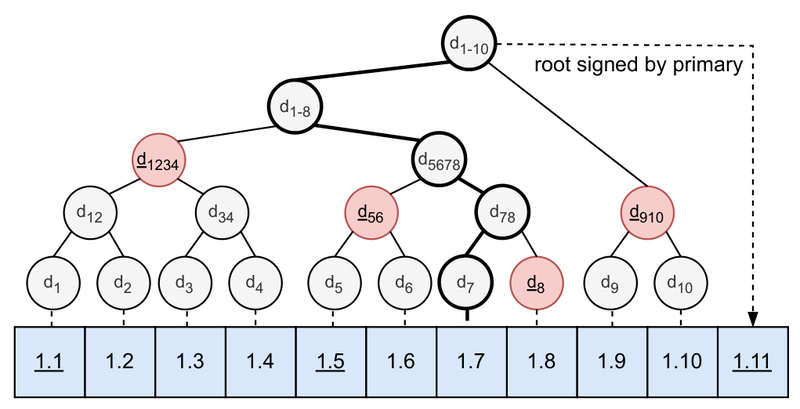
CCF doesn’t sacrifice availability for security. It implements state machine replication across a consortium of nodes, ensuring the service remains operational even if some nodes go offline. Every transaction is recorded in an append-only, cryptographically sealed ledger, providing a tamper-evident audit trail.
This ledger isn’t just for show—it’s integral to CCF’s fault tolerance and governance model. Because every change is immutably logged, disputes can be resolved by replaying the exact sequence of operations, and historical states can be reconstructed with confidence.
Flexible, Decoupled Governance
One of CCF’s most innovative aspects is its governance model. In traditional systems, node operators often double as governance authorities—creating centralization risks. CCF breaks this coupling: the consortium (made up of business participants) governs the service through on-chain proposals and voting, while node operators (who may be third-party cloud providers) merely host the infrastructure.
This means a bank, a hospital, and a regulator can jointly govern a shared service—without needing to run or manage servers themselves.
When Should You Use CCF?
CCF excels in multi-organization, high-assurance scenarios where:
- Participants don’t fully trust each other
- Data or logic must remain confidential from infrastructure providers
- Continuous uptime and verifiable correctness are non-negotiable
Ideal use cases include:
- Financial consortia: Shared KYC/AML services, interbank settlement, or fraud detection networks
- Healthcare data collaboration: Secure patient data aggregation for research while preserving HIPAA compliance
- Supply chain transparency: Tracking goods across untrusted partners without revealing proprietary logistics data
- Regulatory reporting: Joint compliance platforms where auditors and regulated entities share a single source of truth
CCF is not a general-purpose web framework. It’s purpose-built for stateful, server-side applications that require strong CIA (Confidentiality, Integrity, Availability) guarantees in adversarial multi-party settings.
Getting Started: Practical Onboarding for Developers
CCF is designed to be developer-friendly despite its advanced security model. Here’s how to begin:
- Install CCF on Linux – CCF runs on standard Linux environments with TEE support (e.g., Intel SGX). Setup instructions are available in the official documentation.
- Explore sample applications – The repository includes ready-to-run examples that demonstrate key patterns like voting, access control, and confidential data storage.
- Build your own app – CCF supports application logic written in TypeScript/JavaScript (via a Node.js runtime inside the enclave) or C++ for performance-critical components.
- Use the templated starter app – A boilerplate project helps you scaffold new services with minimal configuration.
The developer API is intentionally minimal and focused on transaction handling, making it easy to reason about correctness and security.
Important Limitations and Considerations
While powerful, CCF isn’t a silver bullet. Keep these constraints in mind:
- Hardware dependency: CCF requires TEE-enabled hardware (primarily Intel SGX today). This limits deployment to compatible cloud instances (e.g., Azure DCsv3 series) and may exclude environments without TEE support.
- Not for general cloud apps: If your application doesn’t involve multi-party trust boundaries or strict confidentiality requirements, simpler solutions may suffice.
- Governance design matters: CCF provides the mechanism for decentralized governance but doesn’t dictate the policy. Poorly designed voting rules or membership models can undermine security.
Success with CCF depends on aligning your threat model, infrastructure capabilities, and consortium dynamics with its architectural assumptions.
Summary
The Confidential Consortium Framework (CCF) redefines what’s possible in secure multi-party computing. By fusing hardware-based confidentiality with replicated, ledger-backed integrity and flexible governance, it enables organizations to collaborate on sensitive workloads—without needing to trust each other or their cloud provider. If your project involves jointly managing stateful services across organizational boundaries while demanding strong guarantees on privacy, correctness, and uptime, CCF offers a production-ready, open-source foundation worth serious consideration.