Video super-resolution (VSR) has long promised to breathe new life into low-quality video content—enhancing resolution, restoring detail, and eliminating the blur caused by traditional interpolation methods. Yet, most deep learning–based VSR systems remain impractical for real-world applications due to their heavy computational demands and memory footprint, especially when targeting ultra-high-definition 4K output.
Enter EGVSR (Efficient & Generic Video Super-Resolution), a breakthrough solution that bridges the gap between visual fidelity and real-time performance. Built specifically for 4K video upscaling, EGVSR delivers state-of-the-art visual quality while achieving 29.61 frames per second (FPS) on 4K resolution—making it one of the few VSR systems truly viable for live streaming, broadcast, or edge deployment.
Unlike its predecessors, EGVSR isn’t just another academic model; it’s a hardware-aware, deployable system optimized from algorithm design to inference acceleration. Whether you’re enhancing archived footage, building a live broadcast pipeline, or integrating VSR into an embedded device, EGVSR offers a rare combination of speed, quality, and practicality.
Why Real-Time 4K VSR Has Been So Hard
Traditional VSR models like TecoGAN achieve impressive visual quality by leveraging complex architectures and motion compensation via optical flow. However, this comes at a steep cost: high FLOPs, large memory consumption, and slow inference—often under 5 FPS for HD input, let alone 4K. These limitations confine such models to offline processing, rendering them unsuitable for interactive or real-time scenarios.
The core challenge lies in balancing three competing demands:
- Spatial fidelity—sharp, artifact-free upscaling.
- Temporal coherence—smooth, flicker-free motion across frames.
- Computational efficiency—low latency and modest hardware requirements.
Most VSR systems optimize for the first two at the expense of the third. EGVSR rethinks this trade-off from the ground up.
Key Innovations Behind EGVSR’s Performance
Lightweight Architecture with Subpixel Convolution
EGVSR replaces computationally expensive transposed convolutions or multi-stage upsampling with efficient subpixel convolution, a technique popularized by models like ESPCN. This reduces parameter count and accelerates inference without degrading output quality.
Spatio-Temporal Adversarial Learning
To maintain temporal consistency—critical for avoiding jitter or flicker in video—EGVSR employs spatio-temporal adversarial learning. This trains the model not just to generate sharp individual frames, but to produce sequences that feel natural and coherent over time. As a result, EGVSR outperforms prior methods on temporal metrics like tOF (temporal Optical Flow) and tLP (temporal LPIPS).
Hardware-Aware Optimization
Beyond algorithmic design, EGVSR integrates practical inference optimizations:
- Batch normalization fusion: Merges BN layers into preceding convolutions during inference, reducing memory access and computation.
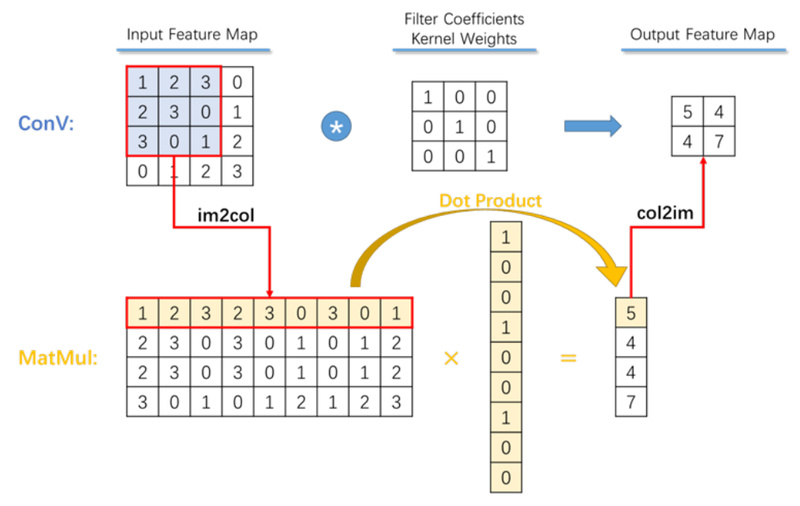
- Convolutional acceleration: Leverages GPU-friendly operations and memory layouts.
- End-to-end PyTorch implementation: Built on modern deep learning practices, ensuring compatibility with standard deployment toolchains.
These optimizations yield dramatic efficiency gains: 85.04% lower computation density and 7.92× faster inference than TecoGAN, while surpassing it in overall visual quality on public benchmarks.
Performance Benchmarks: Quality Meets Speed
EGVSR has been rigorously evaluated across three test datasets:
- Vid4: The standard benchmark for VSR, featuring diverse scenes like cityscapes and foliage.
- ToS3: Used in TecoGAN evaluations, containing challenging sequences like human faces and indoor motion.
- Gvt72: A newly introduced dataset with 72 diverse 4K sequences spanning natural scenery, urban environments, sports, and daily life—offering a more realistic stress test.
On these datasets, EGVSR consistently ranks #1 or #2 across key metrics:
- LPIPS: Perceptual similarity (lower is better).
- tOF / tLP: Temporal consistency indicators.
- Composite video quality score: A balanced metric incorporating spatial and temporal components.
Critically, this performance is achieved at 4K resolution (3840×2160) on consumer-grade hardware (e.g., NVIDIA RTX 2080Ti), proving real-time 4K VSR is not just possible—it’s here.
Practical Use Cases
EGVSR is ideal for applications where latency, visual quality, and motion smoothness are non-negotiable:
- Live 4K broadcasting: Upscaling legacy HD or SD feeds to 4K in real time.
- Video-on-demand platforms: Enhancing user-uploaded low-res content before streaming.
- Edge AI devices: Deploying VSR on set-top boxes, drones, or surveillance systems with constrained compute.
- Content creation workflows: Accelerating post-production pipelines that require consistent, high-quality upscaling.
Because EGVSR is open-source (MIT license) and built in PyTorch, it integrates smoothly into existing ML infrastructure.
Getting Started with EGVSR
The project provides a clean, modular PyTorch implementation that’s easy to set up and extend:
Requirements:
- Ubuntu 16.04 or higher
- NVIDIA GPU with CUDA and cuDNN
- Python 3 and PyTorch ≥ 1.0
- Dependencies:
numpy,opencv-python,matplotlib,pyyaml,lmdb
Datasets: Pre-organized support for Vid4, ToS3, and the new Gvt72 dataset, with clear directory structures for ground truth (GT) and low-resolution (LR) inputs.
Unified Framework: Notably, EGVSR’s codebase also supports other leading VSR methods (VESPCN, SOFVSR, FRVSR, TecoGAN), enabling direct comparisons and ablation studies—valuable for researchers and engineers evaluating multiple approaches.
Pretrained models are available, allowing immediate inference without training from scratch.
Limitations and Considerations
While EGVSR sets a new bar for real-time 4K VSR, users should note:
- It’s optimized for 4× upscaling under Gaussian degradation. Other scale factors (e.g., 2×, 3×) or noise models (e.g., real-world camera noise) may require retraining or adaptation.
- Real-time 4K performance assumes a capable GPU (e.g., RTX 2080Ti or better). Lower-end hardware may not achieve 30 FPS at full resolution.
- The project is released for academic and research use under the MIT license—commercial deployment should verify compliance.
That said, its modular design makes it a strong foundation for customization.
Summary
EGVSR redefines what’s possible in real-time video super-resolution. By co-designing the model architecture, training strategy, and inference pipeline, it delivers high visual quality, excellent temporal coherence, and true 4K@30FPS performance—a trifecta previously thought unattainable. For engineers and technical decision-makers seeking a deployable, efficient, and open-source VSR solution, EGVSR isn’t just promising—it’s ready to use today.
Whether you’re building the next-generation streaming service, enhancing surveillance footage, or researching temporal consistency in generative models, EGVSR offers a compelling blend of speed, quality, and practicality that few alternatives can match.