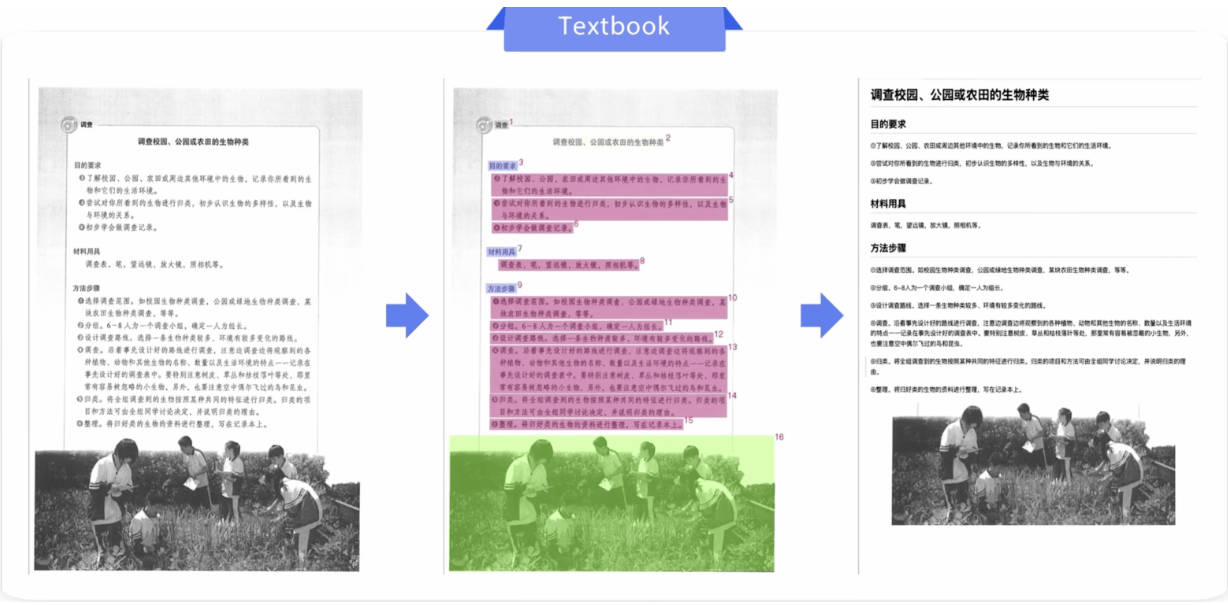
In today’s AI-driven world, turning unstructured visual data—like scanned invoices, handwritten notes, or multilingual PDFs—into structured, machine-readable formats is a foundational challenge. Generic OCR tools often fail when faced with complex layouts, mixed languages, or resource-constrained environments. Enter PP-OCR, an open-source, production-ready optical character recognition and document understanding system developed by PaddlePaddle. Designed from the ground up for real-world deployment, PP-OCR delivers industry-leading accuracy while maintaining an ultra-lightweight footprint, making it ideal for edge devices, mobile apps, and scalable cloud services alike.
With over 60,000 GitHub stars and deep integration into leading AI projects like RAGFlow, MinerU, and Umi-OCR, PP-OCR has become a go-to solution for developers building intelligent document processing pipelines. Whether you’re automating data extraction from legacy forms or enabling real-time multilingual text understanding in a global application, PP-OCR offers a cohesive, end-to-end toolkit that goes far beyond simple character recognition.
Why Lightweight Matters: Performance Without the Bloat
One of PP-OCR’s defining innovations is its ability to achieve high accuracy with minimal model size. The original PP-OCR system introduced models as small as 2.8 MB (for alphanumeric symbols) and 3.5 MB (for 6,622 Chinese characters)—a feat that enables deployment on mobile phones, embedded systems, or cost-sensitive cloud instances without compromising speed or precision.
This efficiency isn’t achieved by cutting corners. Instead, PP-OCR employs a carefully engineered set of strategies—from distilled architectures to optimized training pipelines—that enhance model capability while aggressively minimizing parameters. As a result, teams can deploy OCR capabilities in bandwidth-limited or latency-sensitive scenarios where heavier models (like standard Transformers or large CNNs) would be impractical.
Core Capabilities in PP-OCR 3.x
The latest iteration, PP-OCR 3.x, expands beyond traditional OCR into full-fledged document AI, offering four flagship components that address distinct real-world challenges:
PP-OCRv5: Universal Scene Text Recognition
PP-OCRv5 is a single, unified model capable of recognizing Simplified Chinese, Traditional Chinese, English, Japanese, and Pinyin—even when mixed within the same document. It delivers a 13%+ accuracy improvement over its predecessor and significantly outperforms earlier versions on handwritten and cursive text, which are notoriously difficult for conventional OCR systems. With only 2 million parameters, it remains lightweight while supporting 109 languages, including scripts like Cyrillic, Arabic, and Devanagari.
PP-StructureV3: Structure-Aware Document Parsing
Scanned PDFs and complex layouts often break traditional OCR tools. PP-StructureV3 solves this by intelligently parsing documents into structured Markdown or JSON while preserving original layout hierarchies. It handles nested tables, charts, handwritten notes, vertical text, and even seal (stamp) recognition—features that are critical in legal, financial, and administrative documents. Benchmarks show it outperforms commercial solutions on public and in-house document parsing challenges.
PP-ChatOCRv4: Ask Questions, Get Answers
Moving beyond extraction, PP-ChatOCRv4 enables natural language interaction with documents. Ask, “What is the driver’s license number?” and the system will locate, verify, and return the answer—thanks to tight integration with ERNIE 4.5, Baidu’s large language model. It achieves a 15% accuracy gain in key information extraction and supports multimodal reasoning over text, tables, and seals. Note: this feature requires an API key for the LLM backend, such as Qianfan.
PaddleOCR-VL: A Compact Vision-Language Model for Global Use
At the heart of PaddleOCR’s multilingual prowess is PaddleOCR-VL, a 0.9-billion-parameter vision-language model specifically designed for document understanding. Unlike general-purpose VLMs, it’s optimized for efficiency, combining a NaViT-style dynamic-resolution visual encoder with the lightweight ERNIE-4.5-0.3B language model. It excels at recognizing formulas, tables, charts, and handwritten content across 109 languages, from Latin and Cyrillic to Devanagari and Thai—making it uniquely suited for global, multilingual applications.
Who Should Use PP-OCR—and Why
PP-OCR shines in scenarios where accuracy, efficiency, and structural understanding are non-negotiable:
- Automated invoice or receipt processing in finance or logistics
- Digitization of historical archives or multilingual forms in education or government
- RAG (Retrieval-Augmented Generation) pipelines that require reliable document parsing
- Screen-based translation tools that must preserve layout while converting text
- Mobile or edge-based apps needing lightweight, offline-capable OCR
Its adoption in open-source projects like RAGFlow (for deep document understanding) and MinerU (for PDF-to-Markdown conversion) demonstrates its robustness in production environments.
Getting Started: Simplicity Meets Flexibility
PP-OCR prioritizes developer experience. Basic OCR requires just one command:
pip install paddleocr
paddleocr ocr -i your_image.png
For advanced features like document parsing or AI Q&A, optional dependencies can be installed on demand:
# Install only what you need
pip install "paddleocr[doc-parser]"    # for PP-StructureV3 / PaddleOCR-VL
pip install "paddleocr[ie]"            # for PP-ChatOCRv4
pip install "paddleocr[all]"           # for everything
The Python API is equally intuitive, with consistent interfaces across pipelines and support for C++, Java, Go, and other languages via HTTP or SDKs. Models can be exported to ONNX, accelerated with TensorRT or OpenVINO, and deployed via Docker—ensuring seamless integration into existing MLOps workflows.
Limitations and Practical Considerations
While powerful, PP-OCR 3.x does come with important caveats:
- No backward compatibility: Code written for PP-OCR 2.x will not work with 3.x due to major architectural and API changes.
- LLM-dependent features like PP-ChatOCRv4 require external API keys or self-hosted LLM services.
- Higher-accuracy modes (e.g., server-grade PP-OCRv5) may demand more compute than the ultra-light mobile variants.
- Despite broad language support, extremely rare scripts or degraded document quality may still challenge recognition accuracy.
These trade-offs are well-documented, and the project provides extensive benchmarks and configuration guides to help users choose the right model for their use case.
Summary
PP-OCR isn’t just another OCR tool—it’s a comprehensive document AI platform built for the modern era. By combining ultra-lightweight models, multilingual support, structural awareness, and natural language understanding, it solves the full spectrum of document digitization challenges. Its open-source nature, active maintenance, and production-ready deployment tooling make it a standout choice for developers, researchers, and enterprises alike. If your project involves turning images or PDFs into structured, actionable data, PP-OCR offers a powerful, efficient, and future-proof foundation.